
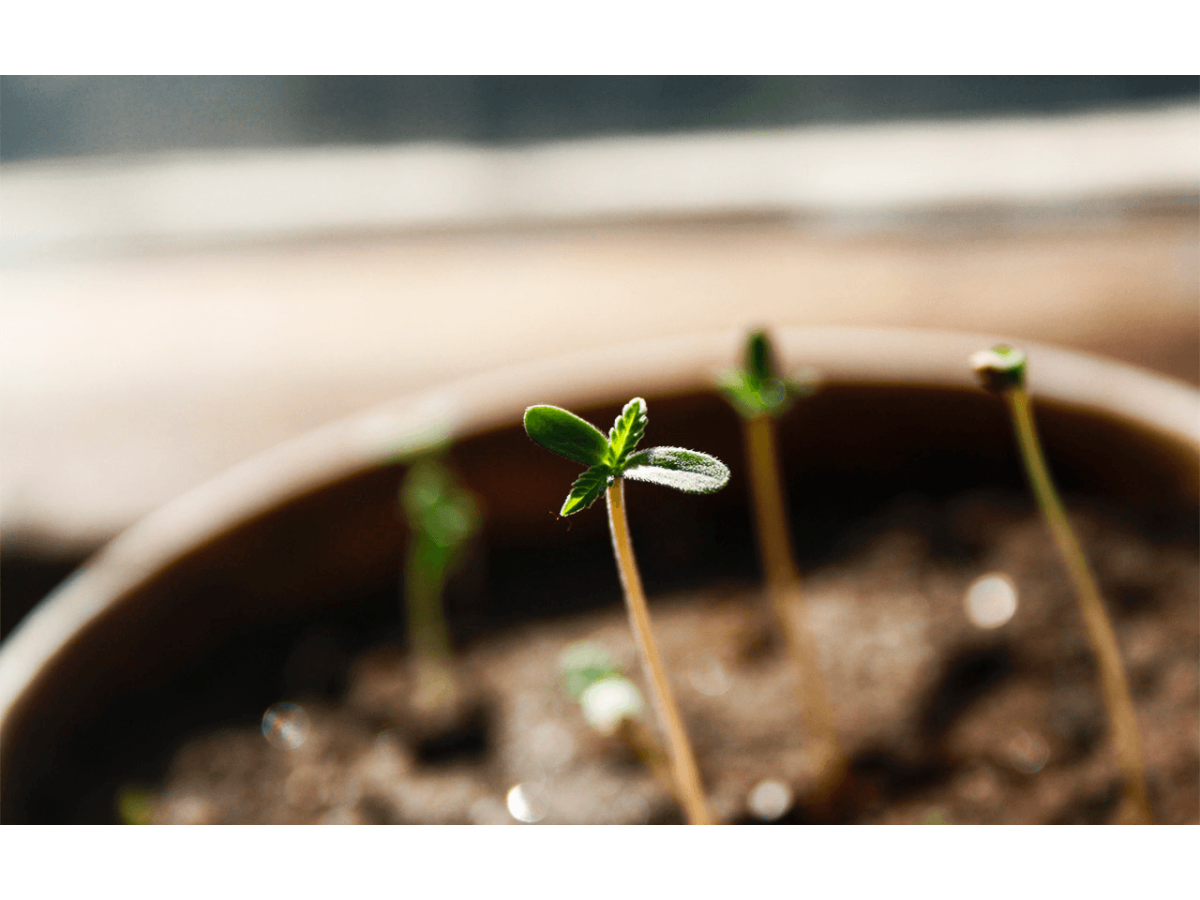
What is germination?
Germination is the very first and at the same time the most important stage in the life of a plant. It is at this moment that the hemp seed goes from a “dormant” state to active growth. Many beginners underestimate this process, believing that it is enough to simply put the seed in the soil and wait a few days. In fact, the future yield, health of the plant and its development depend on the right start.
When the seed enters a favorable environment, it activates internal biological processes. Moisture triggers enzymes that “awaken” the embryo, after which a root emerges from the shell. It is this that will become the basis of the future plant, so it is important to create the most comfortable conditions from the very beginning.
Seed quality is the basis of a successful result
Before you start germination, you should pay attention to the quality of the seed itself. Even ideal conditions will not help if the seeds are not viable. Good hemp seeds have a dense shell, natural color and are not damaged.
In most cases, high-quality seeds begin to germinate within the first day or a little longer. If this does not happen, the reason most often lies in genetics or storage conditions.
Ideal conditions for germination
For the process to be successful, it is necessary to bring the conditions as close as possible to natural ones. The temperature should be stable, approximately within 22-25°C, and the humidity - quite high. In such an environment, the seeds activate faster and give a strong start.
It is also important to ensure darkness. In nature, the seeds are under a layer of soil, so direct light is not needed at this stage. Excess light or sudden changes in temperature can slow down or completely stop the process.
Basic methods for germinating cannabis seeds
There are several proven methods that are used by both beginners and experienced growers. One of the easiest options is to immediately plant the seeds in the soil. This is the most natural way to avoid stress during transplantation. However, it is important not to overwater, as excess moisture can damage the young roots.
Another popular method is to germinate in a humid environment, for example, between moistened materials. This approach allows you to control the process and see when a root appears. After that, the seeds are carefully transferred to the soil.
Some growers use water to start, placing the seeds in warm liquid for a short time. This helps to determine viability faster and activate the processes inside the shell. However, it is important not to keep the seeds in water for too long.
The role of the environment and microflora
Another important factor is the environment in which the seeds germinate. Natural soil contains beneficial microorganisms that stimulate growth and help the plant adapt. That is why many modern solutions for growers include special substrates or starter kits with bacteria.
Such conditions allow the young plant to develop faster, form a strong root system and better absorb nutrients.
Why a proper start affects the entire growing cycle
Germination is not just a technical stage, but the foundation of the entire future result. If the plant has received a good start, it will be more resistant to stress, diseases and external factors. On the contrary, mistakes at this stage can lead to weak growth or even the death of the plant.