
How to Make Hashish: 6 Proven Methods Used by Growers
In fact, making high-quality hash is much easier than it seems. You don't need a lab or expensive equipment—in many cases, all you need is properly prepared raw materials, patience, and an understanding of how trichomes work. Of course, different methods produce different results, but the principle is always the same: separate the resin glands from the plant material as carefully as possible.
What is hashish and why is it so valued?
Simply put, hashish is a concentrate consisting primarily of trich. These small resin glands contain the highest concentration of cannabinoids and terpenes. The less impurities from leaves or other plant parts in the finished product, the higher its quality.
Many newbies mistakenly believe that only large buds are necessary for making hashish. In fact, experienced growers almost never waste a good harvest on concentrates. They more often use manicure trimmings, sugar leaves, or kief, which gradually accumulates after crushing the buds.
This is why hash production allows for the most efficient use of the harvest without unnecessary losses.
What makes the best hashish?
The answer is very simple: from the most resinous genetics. The more trichomes a plant produces, the more kief you'll get, meaning the final product will be much higher quality.
That's why, even at the selection stage, it's important to pay attention to cannabis seeds known for their abundant resin production. Modern hybrids are literally covered in trichomes already mid-flowering, significantly increasing the yield of concentrate.
If you're just planning a new growing cycle, it's best to choose high-quality marijuana seeds from trusted producers right away. Good genetics are half the battle.
Why trichomes?
When you look at ripe buds under a magnifying glass, they appear to be covered in tiny crystal mushrooms. These are trichomes. They produce resin that protects the plant from the sun, pests, and other environmental factors.
It is within the trichomes that cannabinoids and terpenes accumulate. Therefore, the primary goal of any hashish production method is not grinding the plant, but rather separating the resin glands from the leaves as delicately as possible.
Before you begin, you should prepare the material correctly.
Many people jump straight to making hash, but preparation often determines the final result. The plant material must be thoroughly dried. If using the cold method, it's advisable to pre-chill it or even place it in the freezer for several hours.
The colder the trichomes, the easier they are to separate from the plant. Therefore, most modern methods rely on low temperatures in one way or another.
Method #1. Charas – the oldest method in the world
If you ask veteran growers how hashish began, many will answer with one word: charas. This is perhaps the oldest method of resin extraction, still used today in some regions of Asia.
The idea is very simple. The resin gradually adheres to your hands as you work with fresh plants. After a while, a dark, sticky layer forms on your palms, which gently rolls into small balls.
This method requires virtually no equipment, but it does have its drawbacks. Along with the resin, dust, hand oils, and other impurities can end up in the finished product. This is why modern growers often use gloves or opt for cleaner extraction methods.
Method #2: Kief Pressing
If you already have kief accumulated in a grinder or after sifting, making hashish is even easier. Simply compress it under high pressure and sometimes heat it up a bit.
Under heat and pressure, the resin glands stick together to form a dense lump of hashish. This is how classic pressed hash is produced.
For small volumes, a hand-held pollen press is sufficient, although many growers successfully use homemade devices.
Method #3. Dry Sift – one of the best options for the home
When asked which method I would recommend to most home growers, the answer is almost always the same: Dry Sift. It's the golden mean between quality, simplicity, and speed.
The whole idea is to sift the dried material through special screens of varying density. Gradually, the trichomes pass through the mesh, leaving the larger leaf particles on top.
With proper sifting, you can obtain very pure kief, which, after pressing, turns into aromatic hashish with a high resin concentration. Many home growers consider this method to be the best balance between quality and time.
Method #4: Blender Hash – Fast, but with some caveats
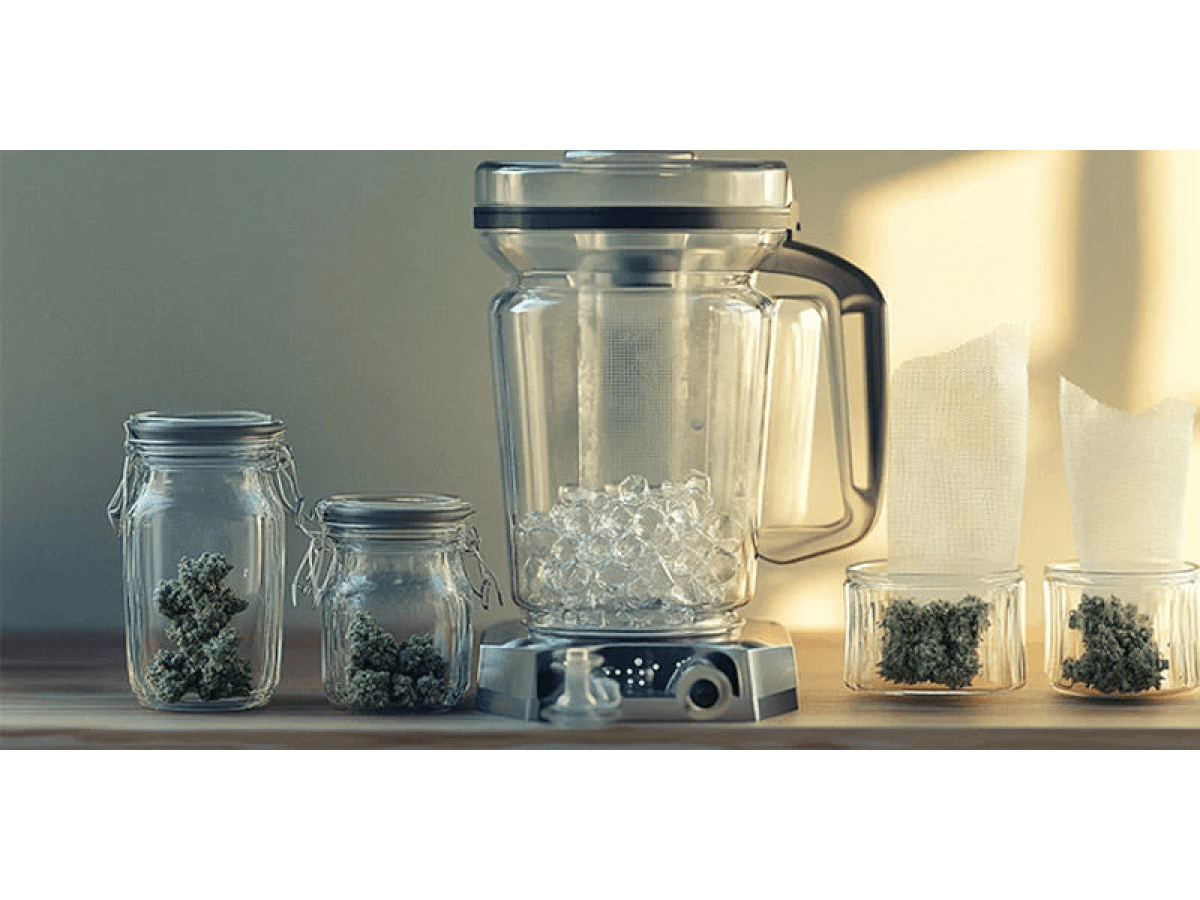
If there are a lot of sugar leaves left after trimming and no special equipment is available, some growers use a regular kitchen blender. This method is quite simple and allows you to quickly separate a significant portion of the trich from the plant matter.
The raw material is mixed with cold water and ice, then briefly crushed. The low temperature causes the trichomes to become brittle and separate from the leaves. The mixture is then filtered through special sieves or bags of varying density.
This method has one drawback: if you blend too long or at too high a speed, the blender will begin to crush the plant material. This will result in more impurities ending up in the concentrate, so you need to work carefully and slowly.
Method #5. Mechanical Drum – when there’s a lot of material
If large amounts of trimmings remain after harvest, manual sifting can take several hours. In this situation, many experienced growers use a special dry sifting drum called a Mechanical Drum.
The operating principle is very similar to Dry Sift, but the entire process is automated. Inside the drum is a mesh of a specific caliber. As it slowly rotates, the trichomes pass through it, while the leaves and small branches remain inside.
The main advantage of this method is speed. Much more material can be processed in a single cycle than with manual sifting. Therefore, the Mechanical Drum is often used by those who regularly grow several plants or handle large volumes of trimming.
Method #6. Bubble Hash – one of the cleanest methods
In terms of the quality of the finished product, many growers consider Bubble Hash to be one of the best methods for extracting hashish. Its main advantage is that the trichomes are separated using cold water and ice, without mechanically crushing the dry material.
Special bags with different mesh sizes are used for the process. First, the plant material is cooled in water with a large amount of ice, after which the mixture is gently stirred. The resin glands settle to the bottom and gradually pass through several layers of filtration.
Different bags allow for the production of concentrates with varying degrees of purity. Fine fractions typically contain minimal plant impurities and are considered the highest quality.
What strains are best for making hashish?
Not every genetics is ideal for producing concentrates. If your goal is to maximize resin production, look for strains known for their abundant trichome production. These strains produce the highest yields of kief and high-quality hashish.
When choosing, consider not only the resin content but also the aromatic profile. Strains with a rich terpene profile produce a more pronounced aroma and flavor in the finished concentrate.
Common mistakes that are easy to avoid
Almost every grower makes the same mistakes when trying to make hash for the first time. They often use under-dried material or work in a warm room. As a result, the resin becomes sticky, difficult to remove, and some of it simply remains on the tools.
Another common misconception is excessive grinding of raw materials. The desire to obtain more concentrate often results in a large number of small leaf particles ending up in the finished product along with the trichomes.
Maintaining cleanliness is equally important. Any dust, hair, or other foreign matter easily mixes with the resin and is then virtually impossible to remove.
Should I use cuttings after trimming?
Definitely yes. The sugar leaves themselves contain a significant amount of trichomes, so experienced growers almost never throw them away. After proper drying and storage, they are perfect for Dry Sift or Bubble Hash.
Large fan leaves contain virtually no resin, so using them to make hashish is usually not practical.
Frequently Asked Questions
Which method is better for beginners?
For first-time growers, most recommend Dry Sift. The method is simple, doesn't require expensive equipment, and produces high-quality concentrate.
Can you use sugar leaves?
Yes. Sugar leaves themselves, after trimming, are one of the best materials for making hashish due to their high trichome content.
Why is Bubble Hash considered one of the highest quality?
Because the trichomes are separated using cold water and ice, and multi-level filtration allows you to obtain a concentrate with a minimum amount of plant impurities.
Which seeds are best for producing concentrates?
The best choice is strains with high resin content and a rich terpene profile, which produce a large number of trichomes.