Transplanting autoflowering cannabis strains: how to avoid stress and loss of growth
Autoflowering cannabis strains are known for their rapid development and independence from the light cycle. It is these features that make them popular among those who value simplicity and quick results. But along with these advantages, there is an important nuance - sensitivity to any changes, especially when it comes to the root system. Transplanting in this case becomes a delicate procedure, where every mistake can affect the further development of the plant.
Transplanting autoflowering strains is possible, but only with the right approach. This is not standard practice, but rather an exception that applies in specific conditions. That is why it is important to understand when it is justified and when it is better to avoid any intervention.
Can autoflowering strains be transplanted?
The issue of transplanting is controversial. Some believe that this is an absolutely dangerous procedure, while others successfully use it in their practice. The truth, as always, is somewhere in the middle. Transplantation is possible, but only for a limited period and with the utmost caution. The plant has a very short development cycle, and any stress can take time that it will no longer be able to compensate for.
That is why transplanting should not be a standard stage. If it is possible to immediately plant the seeds in the final container, this will be a more reliable solution. But in conditions of limited space or when working with several plants, sometimes it is necessary to use intermediate containers. In this case, transplanting becomes a tool that must be used very carefully.
Optimum time for transplanting
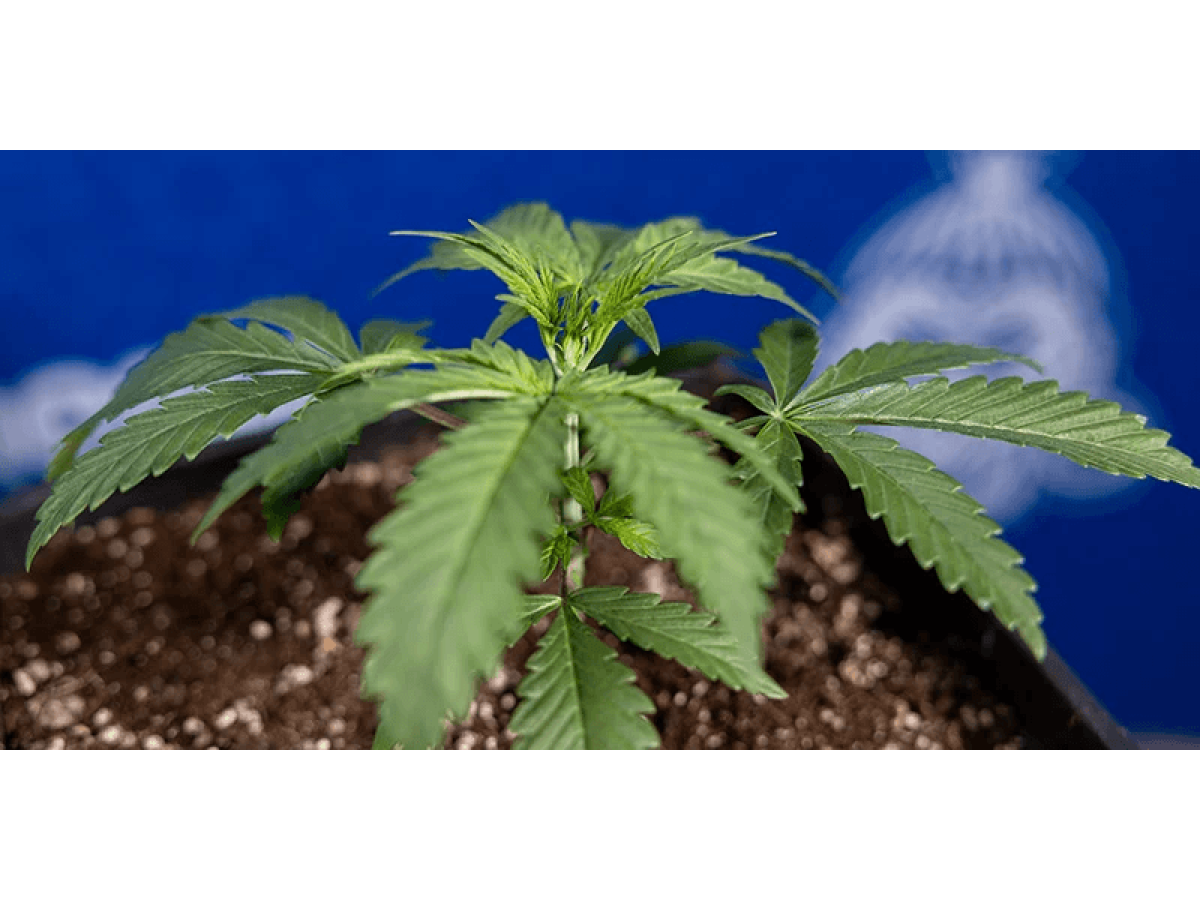
Time plays a key role. The safest period is the early stage of development, approximately 7-10 days after germination. At this point, the plant already has several true leaves and a small but formed root system. This allows you to move it with minimal risk.
If you postpone the transplant, the risks increase significantly. Later, the roots become more developed and sensitive to damage. And given that autoflowering varieties do not have a long vegetative period, they do not have time to fully recover from stress. This can lead to slower growth or reduced potential.
Choosing a container for constant growth
The right container is the basis for stable development. It must be large enough so that the root system can develop without restrictions throughout the cycle. At the same time, it is important to consider the balance between volume and humidity control. A container that is too large can retain excess moisture, while one that is too small can restrict growth.
The material of the container also matters. Some options are better at letting air through, while others are better at retaining moisture. That is why it is worth choosing a container not only by size, but also by properties that affect the root system.
| Container type | Features | Impact on development |
|---|---|---|
| Fabric pots | Good aeration | Promote root development |
| Plastic | Retain moisture | Require watering control |
| Air-pots | Air pruning of roots | Form a strong root system |
Stress-free transplanting process
The most important rule is minimal intervention. The root system should remain as intact as possible. Any disruption to the structure can cause stress, which will affect further development. The process itself should be quick, neat and without sudden movements.
Before transplanting, a new container should be prepared. The soil should be slightly moist and homogeneous. This allows the plant to adapt to the new environment more quickly. After moving, it is important not to compact the soil excessively in order to maintain air access to the roots.
Adaptation period after transplanting
The first days after transplanting are critical. It is at this time that the plant reacts to the change in environment. It is important to ensure stable conditions: moderate lighting, humidity control and the absence of sharp temperature fluctuations. Any additional stress during this period can affect the speed of development.
Watering should also be moderate. Excess moisture can create problems for the root system, which has not yet adapted to the new volume of soil. It is better to let the environment dry out a little than to create conditions for stagnant water.
Alternative to transplanting
The simplest and most reliable solution is to avoid transplanting. Planting directly into the final container avoids any stress associated with moving. This is especially true for autoflowering varieties that have a limited time to develop.
This approach provides stability and predictability. The plant immediately adapts to the environment and does not waste energy on recovery after transplanting. In many cases, this gives a better result than any manipulations with containers.
Typical mistakes
- Late transplanting, which causes severe stress
- Damage to the root system during movement
- Excessive watering after transplanting
- A sharp change in environmental conditions
These mistakes often seem like trifles, but they are the ones that affect the result. Even one wrong action can change the dynamics of plant development. Therefore, it is important not to rush and work as carefully as possible.
The role of quality Sports Seeds seeds
Quality seeds — are the basis for stable development. Even ideal conditions do not compensate for weak genetics. That is why it is important to choose proven sources, where each variety has stable characteristics. Sports Seeds focuses on genetics that provide predictable results and adaptability to different conditions.
When the seeds are of high quality, the plant tolerates even difficult stages, such as transplanting, better. This does not mean that the risks disappear, but they become much smaller. As a result, this gives a more stable result and fewer problems in the process.
This material is for informational purposes only. Before taking any practical action, it is important to consider the legislation of your country. A responsible approach always begins with understanding the rules and respecting them.