
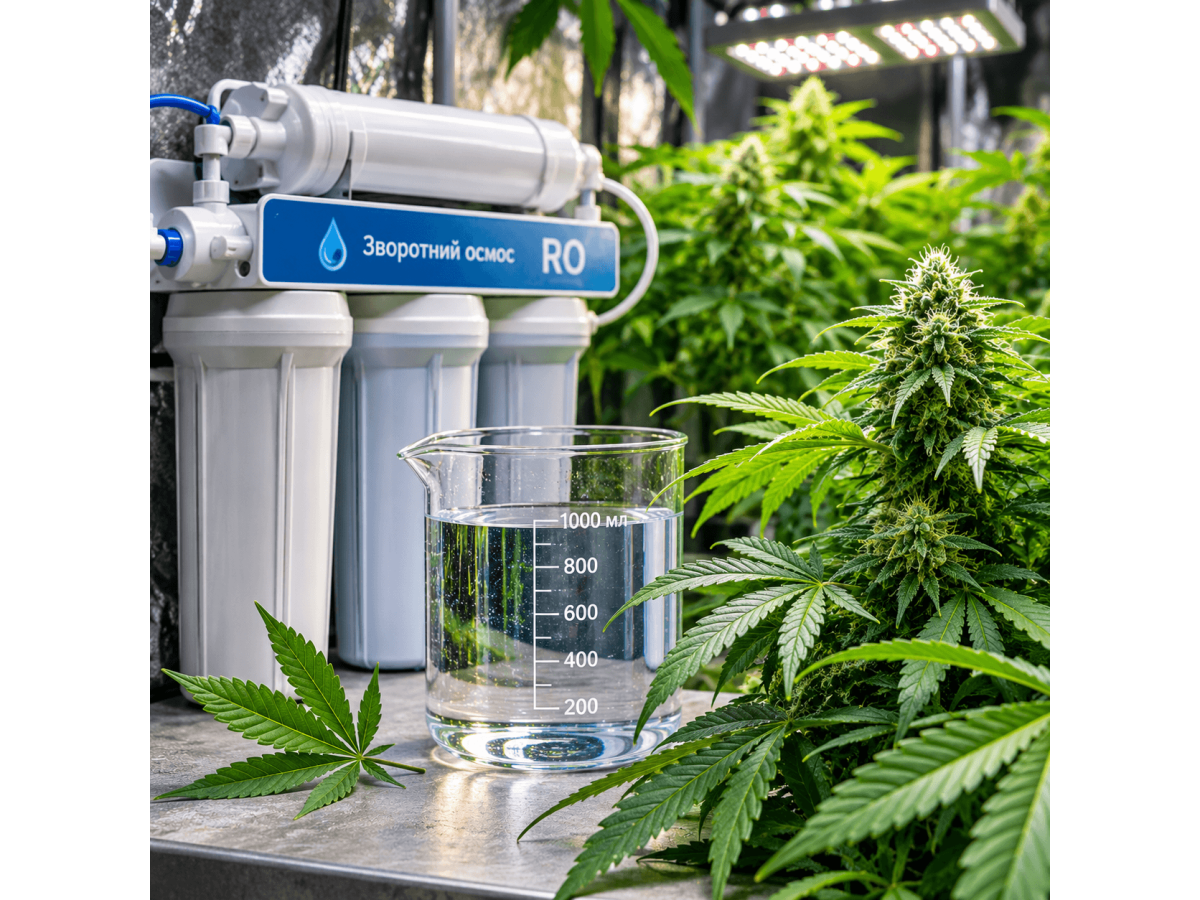
Return osmosis for cannabis: what purified water is needed as the RO system processes it
The depth of water affects the root system, the availability of mineral elements and the growth of plants. To be clear, tap water can contain a lot of dissolved salts, which can change its chemical properties.
One of the purification methods is reverse osmosis, or RO (Reverse Osmosis). This technology allows you to completely change the concentration of water and remove water with a low level of mineralization. Let's take a look at its peculiarities, advantages and limitations.
What is negative osmosis?
Return osmosis is a membrane technology for water purification. Under pressure, it passes through a permeable membrane, which traps a significant part of the dissolved salts and other houses.
As a result, two streams are created: the water is purified and the concentrate, from which most of the filtered substances are removed.
RO systems are used for the preparation of drinking water in laboratories, aquariums, industry and agriculture.
What kind of words does the RO filter remove?
The membrane replaces a variety of different components, including calcium, magnesium, sodium and other ions. This clear system can significantly reduce the concentration of several important metals.
At the same time, cleansing is not absolutely the same for all people who are pregnant. The result is stored in the membrane, pressure, temperature and additional filtration stages.
It is important to understand that some of the barren minerals are removed from untidy houses.
Why does the TDS indicator have a value?
TDS (Total Dissolved Solids) is an indicator of the extreme number of dissolved speeches near the water. In everyday devices, you need to evaluate it through electrical conductivity.
A high value can indicate significant mineralization, but in itself does not indicate what words are present in the warehouse.
For example, two samples with the same TDS can differ significantly in the concentration of calcium, sodium and other components.
Advantages of water purification using the RO method
- Low mineralization. The membrane removes a significant portion of the dissolved salts.
- Pre-bachelor warehouse. Purified water contains less foreign mineral deposits.
- Change of harshness. The concentration of calcium and magnesium salts decreases.
- The scope of stagnation is wide. The technology is used both in practice and in professional water treatment systems.
This method can be especially useful where the output water has high hardness or poor mineral storage.
A small amount of reverse osmosis
However effective, membrane filtration has a number of features that need to be addressed.
- Vitrati water. Part of the flow is introduced into the drainage simultaneously with the concentrate.
- Waste of minerals. Cleansing changes the quantity not only of unwanted components, but also of brown components.
- Maintenance. The cartridges and membrane must be replaced periodically.
- Vartist. The purchase and operation of the system will require additional expenses.
The drainage water must be stored in the building structure. Current models can be significantly more economical than older systems.
Reverse osmosis and distillation: what's the difference?
Both methods allow you to extract water with a low amount of dissolved salts, but the principle of their operation is different.
| Characteristic | Reverse osmosis | Distillation |
|---|---|---|
| The principle of robot | Membrane filtration under pressure | Vaporization and condensation |
| Вміст солей | Significantly decreasing | Zazvichiy very low |
| ОСні витрати | Water, cartridges, membrane, inodes, electricity | Electricity for heating |
| Productivity | Place under the membrane and vice | Leave under the pressure of the distiller |
| Typical zastosuvannya | Everyday professional water treatment | Laboratories, technical and everyday needs |
How purification affects the pH of the water
After removing mineral salts, the water has a low buffer value. This acidity can easily be changed by the infusion of dissolved carbon dioxide and other substances.
It is worth noting that reverse osmosis will automatically ensure the ideal pH. Indicate to lie in the water storage after purification.
They will deprive the water of calcium and magnesium
The RO membrane removes a significant portion of the hardness salts. As a result, the concentration of calcium and magnesium significantly decreases.
For plants, these elements are important: calcium takes part in the formation of cellular structures, and magnesium enters the chlorophyll storage.
However, it is necessary to provide additional mineralization in the form of a specific stagnation, storage of the substrate and other reservoirs of living substances.
What to consider when choosing an RO system
Before purchasing a new product, evaluate the acidity of the output water, the required productivity and the expected maintenance costs.
Main characteristics:
- membrane productivity, as is often stated in GPD (gallons per dose);
- the number and significance of the stages of the forward filtration;
- supply of purified and drainage water;
- availability of replacement cartridges and membranes;
- The working pressure is up to the connection.
Don't forget, the most expensive model will be the best choice. It is important that these possibilities correspond to actual needs.
Why is osmosis necessary for skin problems?
Since tap water has a pleasant mineral content and does not contain unwanted pollutants, additional membrane filtration may be unnecessary.
Nowadays, the availability of drinking water always means the optimal storage for all technical and agricultural tasks.
Therefore, it is better to make decisions based on water analysis, and not on the basis of taste, clarity and TDS readings.
Shcho varto nobility chitachi
In the Sports Seeds blouse we see not only the history of selection and the characteristics of the collection plant, but also the technologies that are used in current growing.
Reverse osmosis is an application of technology, but it is important to understand the real possibilities of acquisition and not rely on advertising hype.
FAQ
Що ознає RO?
RO - short term for Reverse Osmosis, which is reverse osmosis. This is a technology of membrane water purification.
How does reverse osmosis remove all minerals?
The system removes a significant portion of the dissolved salts, but the purification stage depends on the characteristics of the membrane and the minds of the robot.
What is the difference between TDS and water hardness?
No. TDS characterizes mineral mineralization, and hardness is closely related to the concentration of calcium and magnesium.
Is it necessary to check the pH after the RO filter?
Thus, acidity is important for a specific distillation. Reverse osmosis does not guarantee a fixed pH value.
What is better: distilled water or reverse osmosis?
Both methods effectively reduce mineralization. Choose to store the required service, availability and value of purified water.